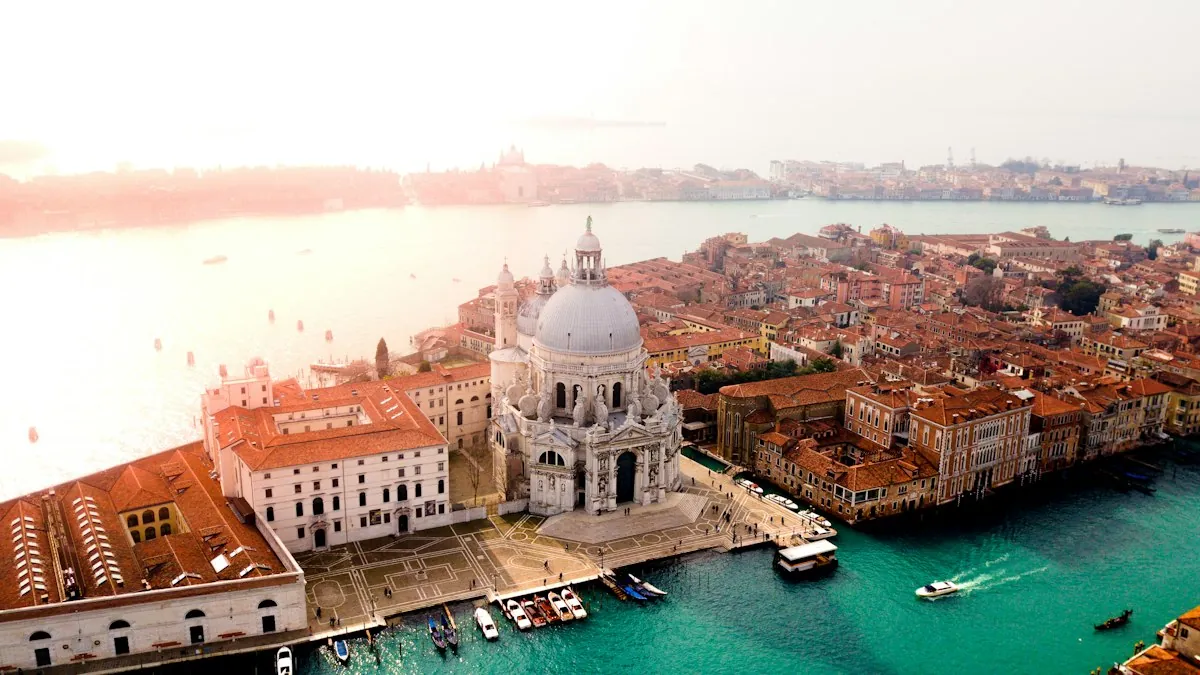
A great 7 day Italy itinerary is a balancing act: Rome’s ancient grandeur, Florence’s Renaissance art, Venice’s canals, and the Amalfi Coast’s cliffside drama — all in a single week, without spending the trip staring at a departure board. This plan threads all four together on fast trains, with one well-placed base per stop and a pace that still leaves room for long lunches — start with our Italy travel guide for the bigger picture.
Is 7 Days Enough for Italy? An Honest Answer
For first-timers doing the classic Rome, Florence, Venice itinerary, seven days is enough to see the highlights properly at a comfortable pace. Adding the Amalfi Coast to that week — as this itinerary does — means every stop gets leaner and one travel day gets longer. That is the honest trade-off.
If you want depth over breadth, drop the coast and give the extra days to Rome and Florence. If you want the greatest-hits week, the plan below works — provided you pre-book every timed entry and protect your evenings for wandering. Don’t add a fifth stop; four is the maximum for seven days.
Your 7 Day Italy Itinerary at a Glance
The route is built around Italy’s fastest rail lines:
- Days 1–2: Rome — ancient Rome, the Vatican, and the historic center
- Days 3–4: Florence — Renaissance art, plus a Tuscan day-trip option
- Day 5: Venice — one intense, wonderful canal day
- Days 6–7: Amalfi Coast — based in Sorrento, with Positano and a Capri-or-Pompeii finale
Fly into Rome and home from Naples (an “open-jaw” ticket). It costs about the same as a return to one city and saves you an entire backtracking day.
Days 1–2: Rome — The Eternal City
Give Rome two full days: enough for the essential spine — ancient Rome, the Vatican, and one great neighborhood wander. Our Rome city guide goes deeper if you want more.
Day 1: Ancient Rome
- Morning: The Colosseum — book the earliest timed entry slot available. Pair it with the Roman Forum and Palatine Hill, which are usually covered by a combined ticket.
- Afternoon: Walk to the Pantheon, Piazza Navona, and the Trevi Fountain. These cluster beautifully on foot.
- Evening: Dinner in Trastevere, Rome’s most atmospheric old quarter — arrive hungry and wander first.
Day 2: The Vatican and the historic center
- Morning: The Vatican Museums and St. Peter’s Basilica. Book museum tickets as soon as your dates are fixed; the first entry of the day beats the worst of the crowds.
- Afternoon: Castel Sant’Angelo, then across the river to Campo de’ Fiori and the Jewish Ghetto for lunch.
- Evening: Sunset at the Orange Garden on the Aventine Hill, then dinner in Testaccio if you want the local-food side of Rome.
Booking tip: The Colosseum and Vatican Museums both use timed entry with limited slots. Book directly on the official sites as soon as your dates are fixed — third-party resellers charge steep markups for the same slots.
Days 3–4: Florence — Renaissance Art and a Tuscan Escape
Take a morning high-speed train from Rome to Florence — the shortest intercity hop of the week. Florence is compact; you’ll walk nearly everywhere.
Day 3: Renaissance Florence
- Morning: The Uffizi Gallery (book ahead) — Botticelli, Leonardo, and Michelangelo in two to three focused hours.
- Afternoon: The Duomo complex: climb Brunelleschi’s dome for the city’s best view, then see the Baptistery’s bronze doors.
- Evening: Cross the Ponte Vecchio to the Oltrarno district — artisan workshops, aperitivo, and dinner away from the center’s tourist menus.
Day 4: Choose your adventure
Option A — Tuscan countryside: A day trip to Siena or a half-day wine tour in Chianti. Siena’s shell-shaped Piazza del Campo and striped cathedral justify the journey.
Option B — More Florence: The Accademia (Michelangelo’s David — book ahead) and sunset at Piazzale Michelangelo overlooking the Arno.
Day 5: Venice — One Perfect Canal Day
Morning train from Florence to Venice. Venice rewards the traveler who gets lost — the headline sights take half a day; the magic is in the back canals of Cannaregio and Dorsoduro.
- Midday: St. Mark’s Square, the Basilica, and the Doge’s Palace (book the palace ahead in high season).
- Afternoon: Ride vaporetto line 1 down the Grand Canal, then wander the Cannaregio quarter.
- Evening: A cicchetti crawl (Venetian small plates) through Dorsoduro and Santa Croce.
Venice tip: Stay in the city itself, not on the mainland, if your budget allows — Venice after the day-trippers leave is a different, quieter city.
Days 6–7: The Amalfi Coast — Cliffs, Lemons, and the Sea
This is the ambitious leg and the longest travel day: a morning train from Venice to Naples (with one change), then the local train or a seasonal ferry on to Sorrento, the gateway to the coast towns.
Day 6: Positano and the coast by water
- Base yourself in Sorrento (better value, excellent transport links) or Positano (the postcard, at postcard prices).
- Ferry to Positano — arriving by water is the way to see it. Swim, climb the steps, have the long lunch.
- Late afternoon: the coast road to Amalfi town and its cathedral.
Day 7: Capri or Pompeii, then depart
Option A — Capri: Ferry from Sorrento. Ride the chairlift up Monte Solaro on Anacapri for the coast’s best panorama; skip the Blue Grotto unless the sea is calm and the queue is short.
Option B — Pompeii: The local train from Sorrento reaches the ruins quickly. Give them at least three hours — the site is vast. Fly home from Naples in the evening.
Getting Around: An Italy by Train Itinerary
High-speed trains are the backbone of this 7 day Italy itinerary — Trenitalia’s Frecciarossa and Italo link Rome, Florence, Venice, and Naples city-center to city-center. Book on the official Trenitalia site as early as your dates allow; advance fares are dramatically cheaper than walk-up prices.
- High-speed trains cover every intercity leg — seat reservations are compulsory on most fast services.
- Regional trains handle short hops (Florence–Siena, Naples–Sorrento/Pompeii): cheap, no reservation needed, buy at the station.
- The Amalfi Coast is the one place trains don’t reach well — ferries (roughly April to October) beat the buses, which crawl in summer traffic.
Skip the rental car: it’s a liability in Rome, Florence, and Venice — restricted zones, scarce parking — and the Amalfi Coast road is stressful to drive in season.
Where to Stay: Base Picks for Each Stop
- Rome: Monti or Trastevere for character; near Termini station for pure logistics.
- Florence: Oltrarno (across the river) for local life; the historic center for walkability.
- Venice: Cannaregio or Dorsoduro for quieter canals; San Marco only if you want to be central.
- Amalfi Coast: Sorrento for value and connections; Positano for the splurge.
For booking strategy — what to look for in each area and when prices spike — see our hotel booking tips.
Best Time to Visit Italy for This Itinerary
Late April through June and September through October offer the best balance of weather and crowds for this route — warm enough for the coast, cool enough for walking Rome and Florence. Check Italy’s weather month by month before you lock in dates.
August brings heat, peak prices on the Amalfi Coast, and closures — many family-run restaurants shut for part of the month. Winter is the bargain season for the three cities, but much of the coast winds down, so this itinerary shines brightest from spring to early autumn. Italy’s official tourism portal is a useful cross-check for seasonal events.
What Does a 7 Days in Italy Itinerary Cost?
Costs depend mostly on accommodation choices and how early you book trains. Excluding international flights, think in three tiers:
- Backpacker: hostels, regional trains, pizza al taglio and market lunches, with paid sights balanced by free piazzas and viewpoints.
- Comfortable mid-range: B&Bs and three-star hotels, advance high-speed tickets, trattoria dinners. This is the sweet spot for this itinerary.
- Splurge: boutique hotels, flexible fares, proper restaurants — the Amalfi Coast is where this tier earns its keep.
The big-ticket sights each charge admission plus a booking fee, so set aside a dedicated sightseeing fund. And the single biggest savings lever is train timing: tickets bought well ahead cost a fraction of walk-up fares — book trains the day your dates are fixed.
7 Day Italy Itinerary FAQ
Is 7 days in Italy enough for first-timers?
Yes — for the classic highlights. Seven days covers Rome, Florence, and Venice comfortably. Stretching to include the Amalfi Coast, as this itinerary does, makes it a brisk but very doable greatest-hits week. Go deeper, not wider, on a second trip.
Should I do Venice or the Amalfi Coast if I only have a week?
Venice pairs effortlessly with Rome and Florence by fast train, making the three-city version the smoothest one-week trip. Choose the Amalfi Coast version if the sea is non-negotiable — just accept one long travel day and one intense Venice day. If you’re torn, consider combining Italy with a multi-country Europe trip on a longer holiday instead.
Do I need to rent a car in Italy?
No. This itinerary is designed entirely around trains, ferries, and walking. Rent a car only if you add a dedicated Tuscan countryside leg — and even then, pick it up in Florence, not Rome.
Which airports should I fly into and out of?
Fly into Rome (Fiumicino) and home from Naples for the version above — the open-jaw ticket saves a full backtracking day. Doing the classic three-city version instead? Fly into Rome and out of Venice.
How far in advance should I book?
Book timed attraction entries (Colosseum, Vatican Museums, Uffizi, Accademia) as soon as your dates are fixed — prime slots sell out weeks ahead in peak season. Book high-speed trains early for the best fares, and reserve Amalfi Coast hotels months ahead for summer.
Make This Itinerary Yours
This 7 day Italy itinerary is a framework, not a straitjacket — swap the Tuscan day trip, trade Pompeii for a Capri beach day, or slow the whole thing down by dropping the coast. When you’re ready, our trip planner will help you lock in dates, trains, and hotels in the right order. Buon viaggio.